
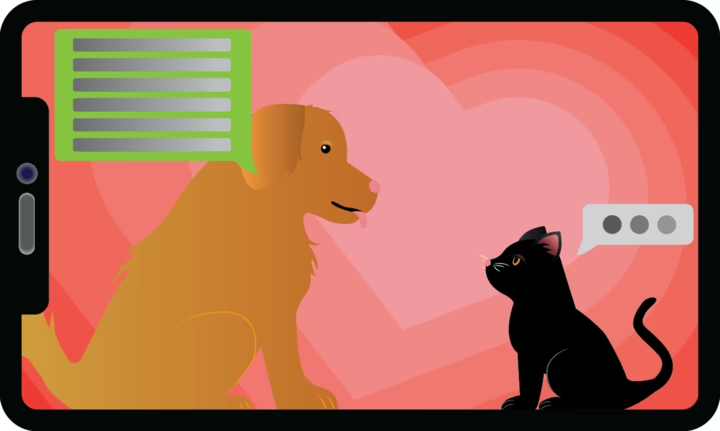
Do you want to be a couple with a golden retriever boyfriend or a black cat girlfriend?
A “golden retriever boyfriend,” a term originating from TikTok, is expected to be “loyal, affectionate, optimistic, supportive, and easygoing,” much like the dog’s traits. These individuals are outwardly friendly, eager to please, emotionally available, and show unwavering devotion to their significant other.
A “black cat girlfriend” (also from TikTok), is expected to be “independent, mysterious, reserved, and selectively affectionate.” As the traits suggest, she is more introverted, self-sufficient, and values her alone time.
Beyond fantasy: A deeper emotional need
These two dating terms originate from Gen Z’s “dating dictionary” on TikTok. Gen Z has grown up online, fluent in meme culture and personality archetypes. Describing partners as golden retrievers or black cats is not superficial—it’s a safe emotional fantasy. It lets people gesture toward connection without fully surrendering to vulnerability.
On dating apps such as Tinder, Hinge, and Bumble, it’s common to see ideal partner descriptions using “golden retriever boyfriend” or “black cat girlfriend.” At a glance, emotional transparency and authenticity define how Gen Z approaches relationships. The golden retriever boyfriend reflects Gen Z’s craving for partners who are openly kind, loyal, and emotionally expressive—not afraid to show love. The black cat girlfriend archetype is not about being aloof but about setting boundaries and valuing self-respect. These archetypes show what Gen Z really needs right now: a bridge between fantasy and the deeper emotional needs for modern dating.
In fact, people tend to seek what they need to fulfill voids in their lives—emotional, physical or psychological connection. These factors shape many expectations in how Gen Z chooses a partner.
Love curated by the algorithm
With the rise of the algorithm, Gen Z’s concept of love is shaped by social media aesthetics—short videos, curated moments, and personality trends. On TikTok, videos tagged “Golden Retriever x Black Cat energy” often attract millions of views.
One viral clip might show an outgoing boyfriend chatting with strangers or helping an older woman cross the street, while his quieter girlfriend watches with a small smile before teasing him later. These moments turn everyday gestures into symbols of chemistry and care. The clips present compatibility as a vibe—gentle, balanced, and emotionally expressive—and the comment sections often echo the same wish: “I need this kind of love.”
Another popular trend shows couples filming “a day in our life” vlogs, where the “golden retriever boyfriend” makes coffee for his girlfriend every day while the “black cat girlfriend” quietly films him from across the room, adding a soft filter and nostalgic song. The result feels cinematic—a small act of love edited into a story. These posts capture how Gen Z often turns ordinary affection into aesthetic proof of emotional connection.
When partners fail to match the golden retriever or black cat ideal, disappointment can hit fast. Many Gen Z daters subconsciously expect people to behave like characters, not complex humans. This is the algorithm effect: the internet rewards consistency, not contradiction—but real people are inconsistent. Gen Z is often described as a generation that lives by “vibe,” “energy,” and “emotion.” When a partner does not meet the aesthetic or emotional rhythm they imagined, it feels like a mismatch instead of a moment for understanding.
Psychologically, this reflects what researchers call emotional perfectionism—the expectation that relationships should feel seamless, comforting, and emotionally fluent from the start. Gen Z’s mental-health awareness and self-reflective language make them emotionally intelligent, but also more sensitive to misalignment. If communication feels off or energy does not match, they’re quick to retreat rather than repair. The retriever and cat archetypes offer a kind of emotional shorthand, but they also risk becoming scripts that real people can’t sustain.
A search for balance
Still, the appeal of the dynamic runs deeper than surface personality traits. It captures what Gen Z values most in relationships: balance. The golden retriever vibe offers emotional safety and warmth; the black cat vibe offers independence and mystery. Together, they represent the generation’s search for a love that feels secure but not smothering, open yet self-protective. In a world of constant stimulation and curated identity, this pairing symbolizes harmony between vulnerability and autonomy—a balance Gen Z constantly seeks. It shows that love can be open and expressive without losing individuality or independence.
Beyond dating trends, the rise of these archetypes reflects Gen Z’s broader lifestyle priorities. They value mental health over appearance, emotional honesty over performance, and self-discovery over conformity. Love, to them, is an extension of personal growth rather than a destination. Relationships should support healing, not hinder it. They want a partner who feels like “home” but still gives them space to grow.
The intimacy paradox
Yet behind this emotional awareness lies a paradox: the same desire for safety can lead to fear of true intimacy. Gen Z often guards their independence so tightly that they struggle to let someone in fully. They crave connection but dread losing control. The retriever and cat pairing, in that sense, becomes symbolic of their inner tug-of-war—between wanting to be understood and wanting to stay untouched.
A generational mirror
The “golden retriever boyfriend” and “black cat girlfriend” are more than a TikTok trend. They represent a generational mindset shaped by algorithms, therapy culture, and the pursuit of emotional balance. For Gen Z, love is not about losing yourself in someone else—it’s about finding someone who lets you stay true to who you already are.
As dating becomes more entangled with algorithms and archetypes, Gen Z continues to define what love and connection mean in a digital age. The golden retriever and black cat pairing may reflect more than a trend—it’s a mirror of the generation’s search for balance between comfort and independence, affection and boundaries. Yet as the line between authenticity and performance blurs online, one question remains: Are Gen Z daters shaping love, or is the algorithm shaping them?

Daisy Huynh
Daisy Huynh is a Staff Editor for The Collegian at Seattle Central College. She is passionate about storytelling, culture, and amplifying student voices through thoughtful writing and editing. Daisy enjoys collaborating with others to highlight diverse perspectives and foster community engagement on campus.





Be First to Comment