After the end, the beginning: Octavia Butler’s “Lilith’s Brood” reimagines what it means to be human
In Octavia Butler’s “Lilith’s Brood” trilogy, humankind has awakened from “extinction” to face a new, borderline-impossible choice: survive through change, or die with their humanity intact.
First published in May 1987 under the series title “Xenogenesis”—later renamed “Lilith’s Brood”—the trilogy’s three novels, “Dawn,” “Adulthood Rites,” and “Imago,” form one of Butler’s most visionary, haunting works. Reading it today, especially as a young Black woman, offers an immersive glimpse into a world that parallels both the past and what is yet to come.
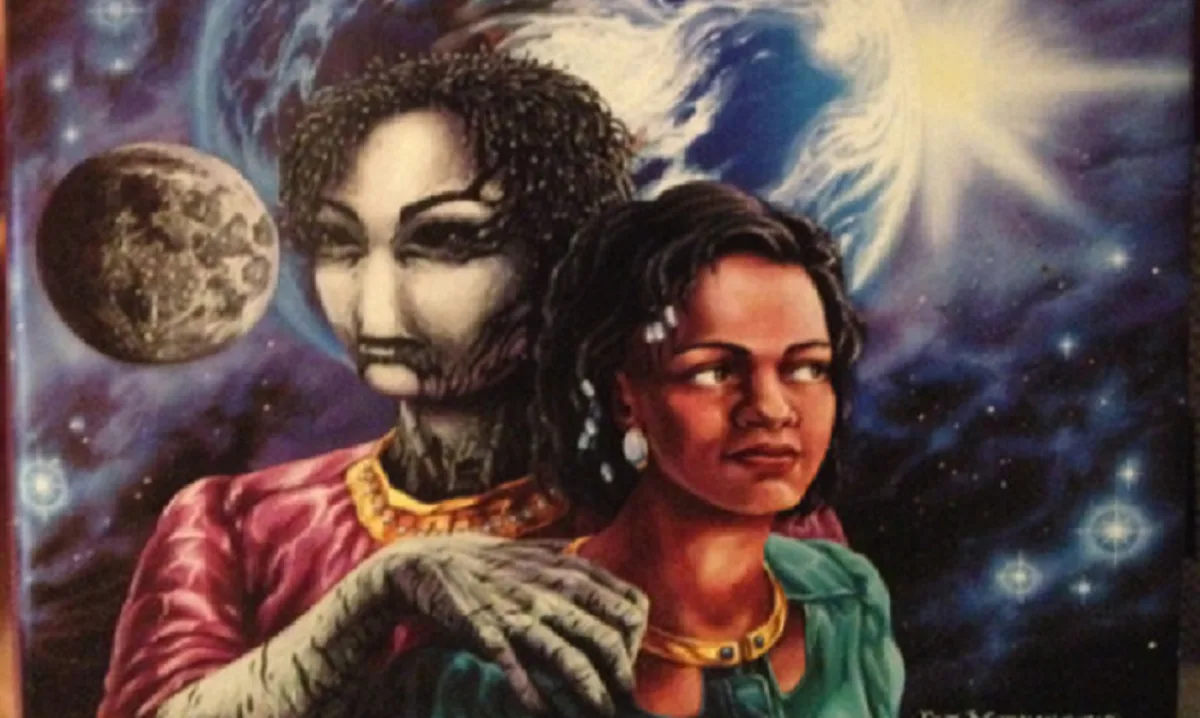
Two hundred fifty years after a nuclear war, survivors awaken from suspended animation in an unfamiliar and peculiar environment. Our main character, a young Black woman named Lilith Iyapo, along with others, finds herself aboard an alien ship operated by a species known as the Oankali.
They claim they can, will, and have helped “save” humans, but the catch is that they plan to merge with them genetically, altering both species simultaneously. Being the first of the survivors to awaken, Lilith becomes the bridge between two worlds, serving as part teacher, part captive, and part mother to a generation that does not fit into either.
In “Adulthood Rites,” the narrative shifts to Akin, Lilith’s son, who struggles to reconcile his human and Oankali sides. His existence raises the trilogy’s central question: What does it mean to belong when every aspect of oneself requires compromise?
Butler’s world is built on uneasy alliances. The Oankali provide healing, survival, and knowledge, but in doing so, they take away the right to choose. This “gift” of survival comes at the cost of individual autonomy.
Lilith’s strength does not come from plot armor or domination; it comes from endurance, clarity, and her ability to maintain compassion for others even as she is being treated like a subject of experimentation. Through this, Butler shows that care without consent is not liberation, and that true community requires mutual transformation. That tension between care and control drives the story’s central emotional core. It echoes the real history of survival in oppressive systems, where achieving safety has often required surrendering power.
“Lilith’s Brood” is an allegory that refuses easy optimism—something I unfortunately did not know going into it. Butler has a habit in her writing: She portrays humans as both aggressor and victim, and the Oankali as both salvation and submission. She makes it so both statements are the truth, and this pattern is common in her works, forcing the reader to hold both truths at once.
The emotional distance in her narration can feel cold, especially for those expecting a cathartic or heroic arc. The precise, calm tone Butler maintains is what makes the “Xenogenesis” series endure. In this trilogy, survival is endurance—the kind learned through experience.
For readers of color, queer readers, and anyone living in between identities, works like this one resonate deeply. She reimagines evolution with the theme of relationships rather than superiority and dominance. Everything about being human is messy and vulnerable.
In the conversation of science fiction, Butler is up there with Ursula K. Le Guin and Margaret Atwood, but her voice is uniquely her own. Where others imagined political systems and alien civilizations, Butler forces readers to look inward, toward the body, the self, toward intimacy, and to the cost of coexistence.
Her influence runs deep into today’s age of Afrofuturism, speculative fiction, and Black feminist thought. Decades before conversations about climate collapse, gene editing, or reproductive justice went mainstream, Butler was already laying the groundwork for authors, readers, and thinkers, posing the question of what humanity might need to sacrifice to endure.
These are not books about aliens saving people from themselves; they are about consent, community, acceptance, resistance, and all aspects that embody the human spirit. I see in this piece and many of Butler’s other works not only a warning but an invitation to embrace change. Here, she reminds readers that change is collective, and that the future will belong to those willing to imagine it together.
In this new world, to be human is to be unfinished, a process that is ever-evolving, always creating opportunities for new beginnings.

Satrn
Hello! My name is Satrn, and I am a writer here at the Collegian. My main focus for my studies is literature and American history, but I have a lot I am interested in pursuing academically. There isn't too much to say about me without boring you to death. I'm a cat mom, I love to read, and I'm literally always looking for someone to game with, so lmk! I guess other than that, I can let you get to know me through my writing, byee!