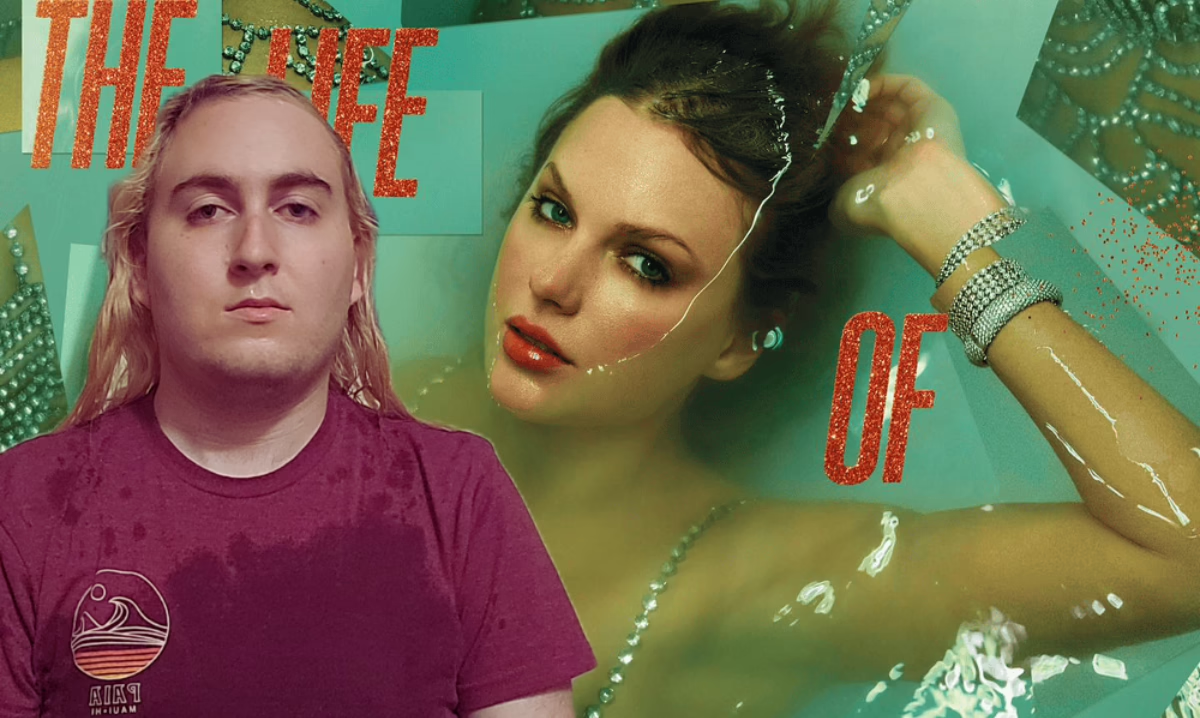
Change the Record: Taylor Swift – “The Life of a Showgirl”
Let’s skip the introduction: This is a brand-new album from Pennsylvanian pop phenomenon Taylor Swift. Swift is one of the biggest musicians not just right now, but ever. If you went out onto the street, you’d probably find more people who recognize her than the president of the United States. She is massive and has one of the most devoted fan bases of any musician, yet with the release of this new album, you’d hardly believe it.
“The Life of a Showgirl” (which I’ll call “Showgirl” from now on) is the newest album from Swift, following last year’s “The Tortured Poets Department.” It’s clear now that the only thing she can do better than make clunky album titles is make mediocre music. I reviewed “The Tortured Poets Department” last year, and I thought it was boring, poorly written, and bland as sand. I can say one thing for sure: She is at least consistent, because all of that still applies to “Showgirl,” perhaps even more so this time. I don’t need to tell you this, though. This record has been getting an absolute flogging online, declared so bad that not even Swift fans like it.
I want to prod into this a bit, though. While I’m not here to praise this record by any means, I’m also not here to throw any more tomatoes than everyone else. After listening to this record and seeing all the backlash, I had to ask myself an important question: Is this really so much worse than her last two albums?
Let’s talk about the music, starting with the opener and biggest hit, “The Fate of Ophelia.” It’s a mildly upbeat pop bop with very weak pianos and synths, given only the slightest bit of life by rumbling bassier synths in parts. It’s a tepid opening but admittedly catchy and bright enough that I get why it became a hit.
Other tracks, like “Elizabeth Taylor” and “Father Figure,” unfortunately don’t carry that same energy, moving into a more low-key ballad territory—or at least I’d call them ballads if they had any shred of emotion in them.
“Father Figure” even gets a baffling beat change at the end that, instead of sounding triumphant or cathartic, just sounds wrong, like the ending of a different song was put there by mistake. Another lowlight is “Wi$h Li$t,” where the watery, drowned-out synths only enhance how awkward Swift’s falsetto is, not helped by the weird vocal filter she has throughout the track.
None of this is new, though. In fact, parts of this read verbatim like my last Swift review, so I doubt it’s some radical new sound change people are up in arms about. Indeed, if you’ve seen any criticisms of this album online, the primary target is the writing and lyricism. This album seems to have fully broken the spell, convincing people that Swift was an extremely talented lyricist, a claim I always found dubious at best. This is the same woman who brought us “Touch me while your bros play Grand Theft Auto” on the last album, and her repertoire here isn’t that different. She either can’t write poetic lyrics or just doesn’t want to. Anytime she even approaches it, like on “Eldest Daughter,” where she says, “Every eldest daughter was the first lamb to the slaughter,” which is a fine lyric, she then follows it with, “We all dressed up as wolves and we looked fire,” such a terrible attempt at throwing slang that it ruins the line.
Despite being 35, Swift is an oddly immature songwriter. On “CANCELLED!” she writes about how she likes having all her friends “cancelled,” a sentiment that suggests you either have no idea what that concept means or you’re a terrible person. There’s also “Wood,” where Swift writes about Travis Kelce’s morning wood—a topic no one asked for, wanted, or needed. It comes off like a 15-year-old girl’s first experience with sex, and it’s as cringeworthy and uncomfortable as that sounds.
The biggest offender is probably “Actually Romantic,” a pseudo-diss track against Charli XCX for her song “Sympathy is a Knife.” If you don’t know, “Sympathy is a Knife” is about Charli’s anxieties and insecurities around other pop girls, and how she can feel alienated from them. Of course, Swift saw this as a slight against her and made a song calling Charli an obsessed cokehead. It’s not just that the premise is catty, fifth-grade feud drama, perpetuated by Swift’s bad attitude toward other pop ladies. It’s also a boring and bland song, with a slow-plodding instrumental more suited to an interlude than a diss track.
To circle back to my point: Is this album really that much worse than her previous work? Sonically, not really. It’s the same boring stuff as ever. But from a lyrical perspective, it is perhaps Swift’s most embarrassing work. I do wonder if people are just sick of Swift right now, the same way they were sick of Drake last year. Putting out a badly written, boring album when everyone is already waiting on your downfall is just a recipe for disaster.

Hello there stranger, this is Kate Megathlin, writer for weekly music reviews for the Seattle Collegian, here to assert how much more important her opinions are than yours. She is a Seattle Central student with a major love of music and music culture, and every week she’ll try to deliver reviews of new albums coming out, if you want to recommend albums for her to review, email her at Kate.Megathlin@seattlecollegian.com.