
Indigenous government-to-government conversations on education come to South Seattle College
How do we move beyond acknowledgment? This question was at the core of the 2026 Government-to-Government Summit at South Seattle College on Monday, May 11. Here, the advancement of collaboration between the Washington tribal and state governments was celebrated and put into practice.
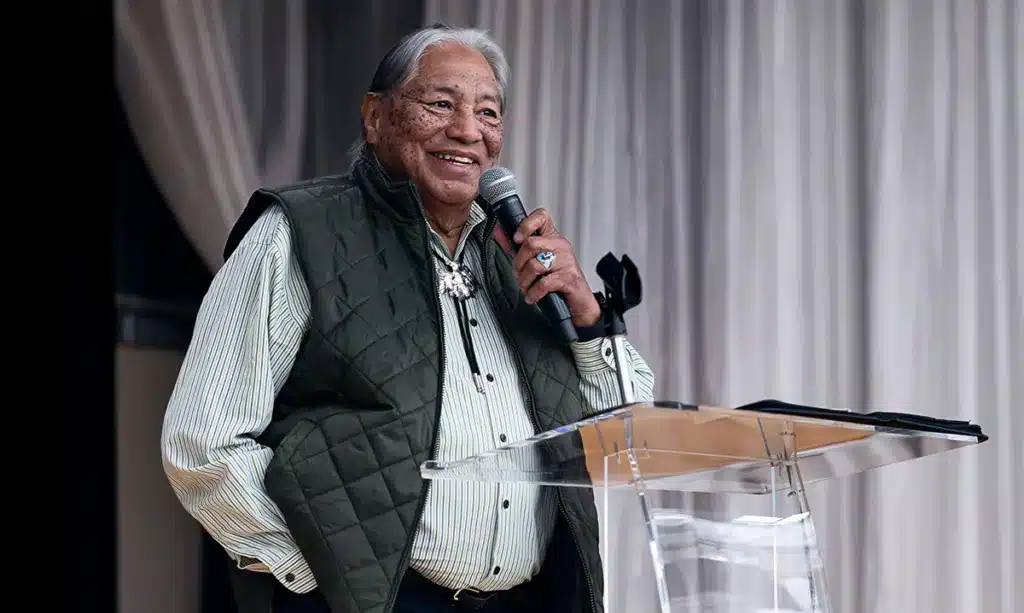
In recent years, within organizations conscious of diversity, equity, and inclusion in the Pacific Northwest, land acknowledgments have become a routine practice to begin gatherings, such as meetings and conferences. They recognize that these gatherings take place on land that was once stewarded by Indigenous nations for thousands of years before the arrival of European colonialism. Given how fundamental the relationship with the land is to Indigenous ways of life, this is considered a positive practice by tribal leadership. However, any true reclamation of Indigenous culture, history, and education involves far more than this. Such progress requires long-term, mutually beneficial relationships defined by recognition of sovereignty and self-determination. Denny Hurtado, retired executive director of the Office of Native Education at the Office of Superintendent of Public Instruction and former Skokomish Tribal Council chairman, has seen this kind of reciprocity develop in real time throughout his life.
Changing course
After the fish wars of the 1960s through the 1980s, when the Washington state government and sovereign tribes were in a chronic state of legal and political conflict, a more sustainable relationship became a priority for all parties. This culminated in the Centennial Accord of 1989, which established a first-of-its-kind framework for direct government-to-government cooperation. Twenty-six federally recognized tribes in Washington—a majority at the time— agreed to the new infrastructure, with Hurtado among the original signatories.
However, trust in the American government can be a dubious notion given the history of broken treaties, such as the Treaty of Point Elliott. Its violation led to the utter destruction of the Black River and, with it, a significant aspect of life for the Duwamish Tribe and Muckleshoot Tribe. As he recalls, Hurtado signed the original Centennial Accord with his fingers crossed behind his back. “I wasn’t sure about it,” Hurtado said. “But I could see, when I look back, how it does make a difference to try and develop these relationships with the state and the feds and our communities.”
Ten years later, in 1999, Hurtado signed another document, the Millennium Agreement. This sought to reaffirm and institutionalize cooperation between the state and tribal governments, pushing for concrete ways to “enhance economic and infrastructure opportunities, protect natural resources, and provide the educational opportunities and social and community services that meet the needs of all our citizens.”
Through sustained legislation, court decisions, and agreements such as these, Washington state has become a leading example of direct government-to-government relationships, charting a new course against the brutal history of genocide that has violated Indigenous people for 500 years. As keynote speaker and executive director at the Governor’s Office of Indian Affairs, Tim Reynon said, it is about making decisions with tribes, not for them. “Understanding the history and sovereignty helps state institutions make more informed decisions, and it helps us move to a mindset of partnership with a co-equal government rather than just treating tribes as another stakeholder,” Reynon said.
“Whoever controls the education of our children controls our future.”
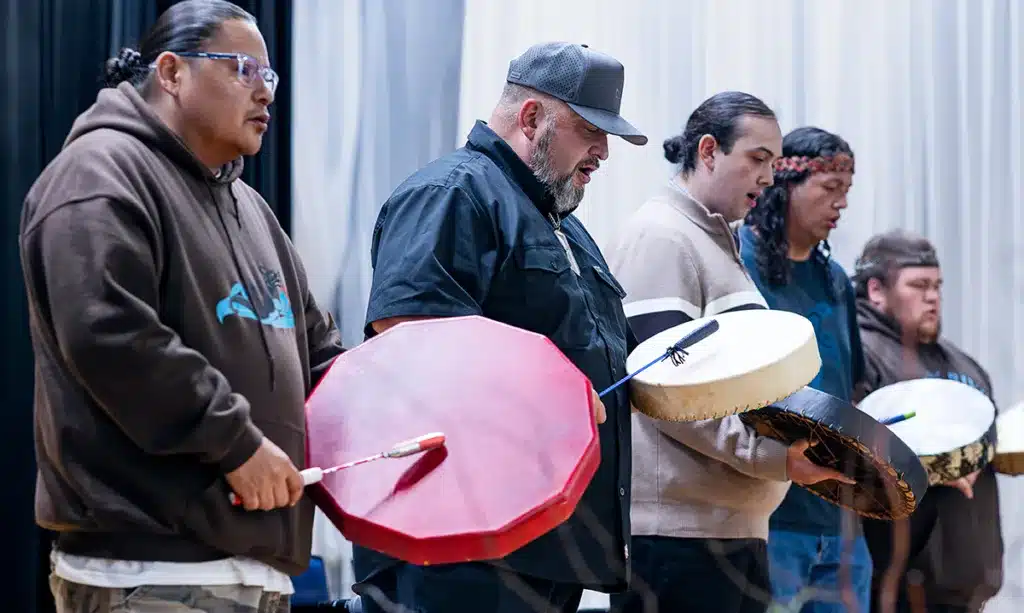
South Seattle College hosted the continuation of these government-to-government conversations. With a focus on education, panels centered on “Work Happening Across the System” and “Serving Our Native Students.” Tribal members dedicated to Indigenous equity spoke on student issues, progress, and future ambitions. Dr. Denise Bill, executive director of adult and higher education at Muckleshoot Tribal College, described the attendance as “Indian educators’ top 40 in Washington.”
For the speakers, a recurring area of concern was data. Tribal relations liaison for the Washington State Office of Equity, Iisaaksiichaa Braine, contends that the largest data question tribes are posed with concerns citizenship for people who belong to more than one ethnic or tribal group. “Those of us who have mixed multinational backgrounds are displaced again,” Braine said. “I had to recruit Native students to the UW and say, ‘Oh, you’re Latino and Native. You should probably just write Native so you get our scholarships.’ That is disgusting. It’s painful.”
On a more basic level, Native students “have the highest poverty rate and most dependents of any ethnic group, largely resulting from historical land loss and trauma,” pointed out keynote speaker Dr. Zoë Higheagle Strong, associate vice president of tribal relations at Central Washington University. Countering problems like these involves a comprehensive reimagining of what education can offer for tribal and non-tribal students alike.
Dr. Eileen Jimenez, dean of college transfer at South Seattle College, called for “indigenizing the curriculum,” formally legislated as the “John McCoy (lulilaš) Since Time Immemorial: Tribal Sovereignty in Washington State” curriculum. Recognized by all 29 federally recognized tribes in Washington, this would integrate neglected material into all class levels. Such material includes Indigenous histories, treaty rights, land education, and intergenerational trauma. It also involves affirmative hiring practices and development efforts to increase tribal representation in policy and curriculum decision-making roles.

Speaker Sarah Sense Wilson, chair and co-founder of the Urban Native American Education Alliance, pointed to a particular barrier to Native students in Seattle Public Schools: transportation. “The reality is our families are spread out throughout the whole Seattle area,” Wilson said. “It’s a hardship to get children of elementary age on a public transportation bus to school.”
Every solution to the issues that Native students face requires funding. Creating Native-specific pathways, implementing curriculum, auditing data systems, supporting post-incarceration reintegration, and outreach initiatives all require substantial resources. The relationship-building that took place at South Seattle College aims to address this. Building a counter-colonial future requires meaningful representation of Indigenous communities in positions of power—tribal governments working directly with the state government on policy, tribal offices embedded within state departments, and the appointment of tribal members to board seats. Allocating resources in a way that materially benefits these communities becomes nearly impossible without their direct involvement.
Represented by the speakers at Monday’s event were members and descendants of the Suquamish, Muckleshoot, Puyallup, Skokomish, Nez Perce, Lummi, Nisqually, Diné, Apsaaloke, Cheyenne, Turtle Mountain Band of Chippewa, Otomi, Tlingit, Haida, Oglala, Nor Rel Muk Wintu, Hupa, Quinault, and Coast Salish tribes. Representing the Seattle Colleges District leadership in these government-to-government talks were Chancellor Dr. Rosie Rimando-Chareunsap, South Seattle College President Dr. Monica Brown, North Seattle College President Dr. Rachel Solemsaas, and Vice Chancellor D’Andre Fisher.

Casey Boothe
Driven by curiosity, Casey is studying journalism in the pursuit of using stories to make sense of the world. Since moving to Seattle two years ago, he’s fallen in love with the city’s vibrant culture, especially within the culinary scene. As a Staff Writer for the Collegian, he is eager to highlight stories and people that resonate with the local community. Aspiring to join the long legacy of journalists speaking truth to power, Casey hopes to keep Seattle informed and engaged.