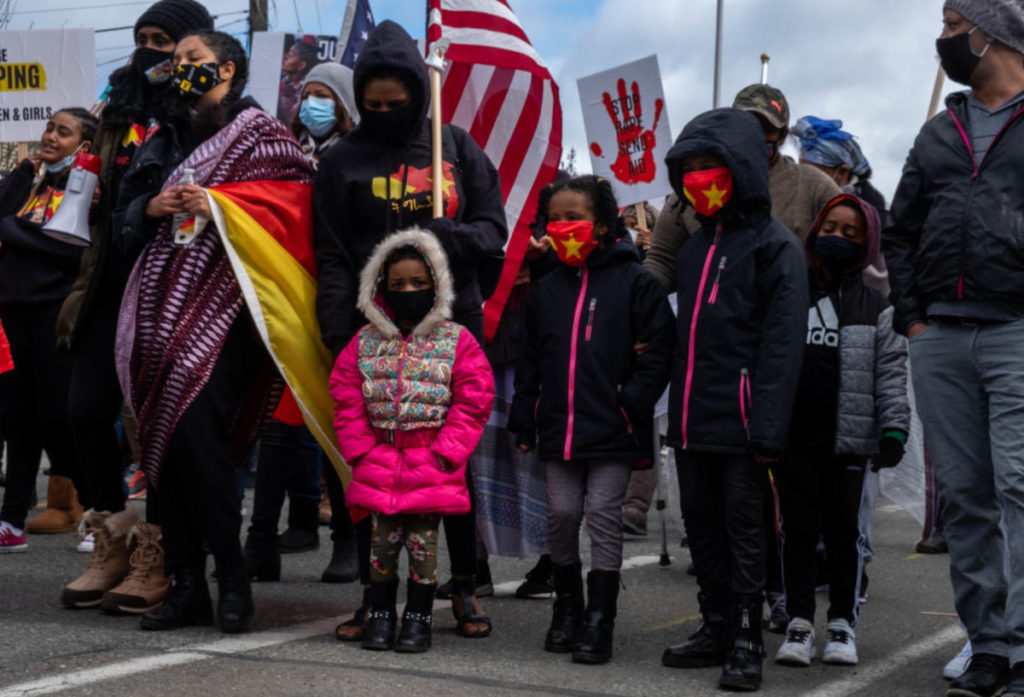
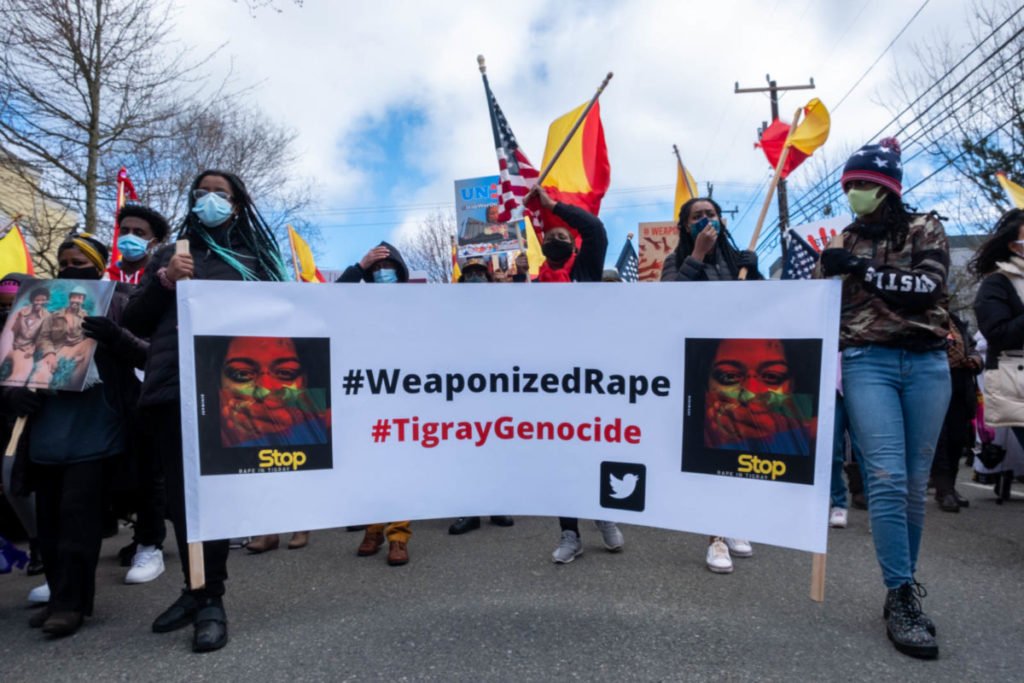
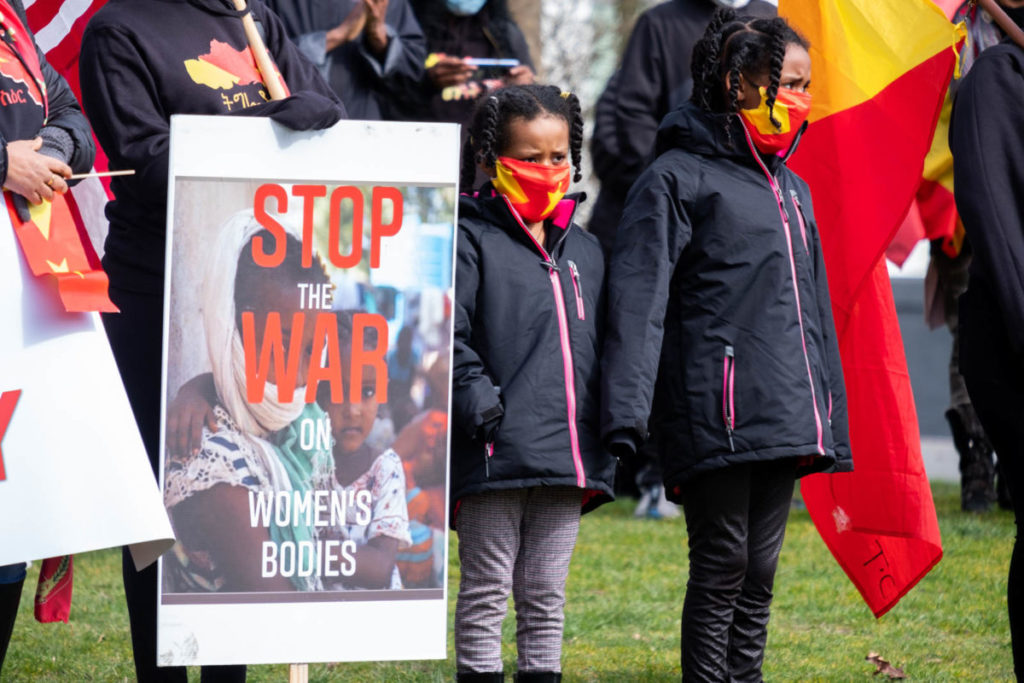
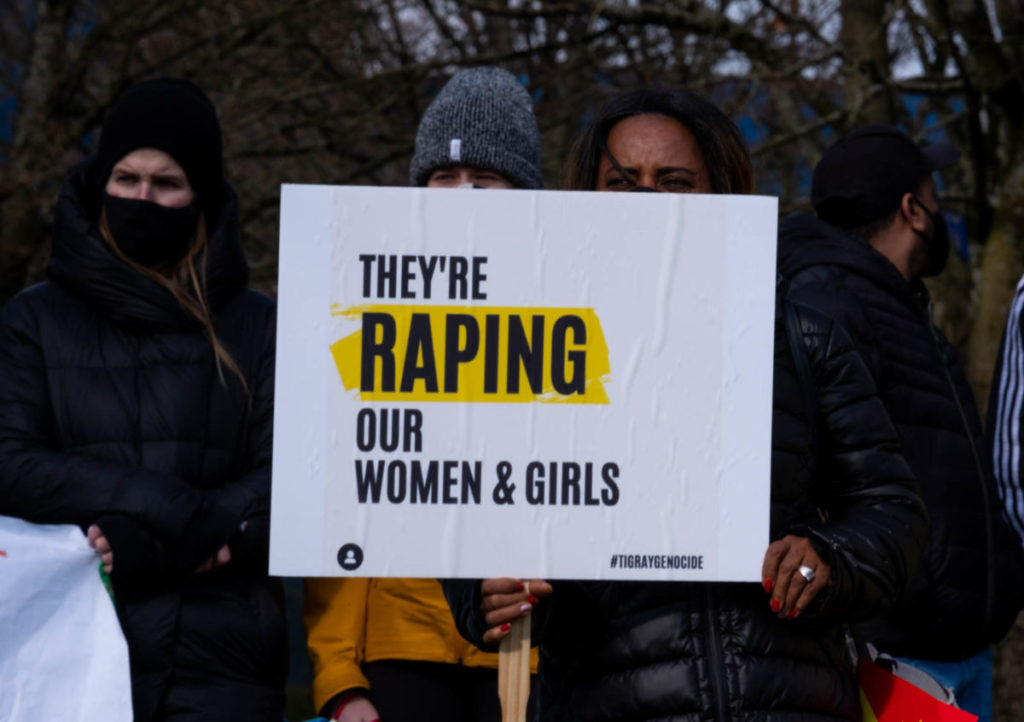
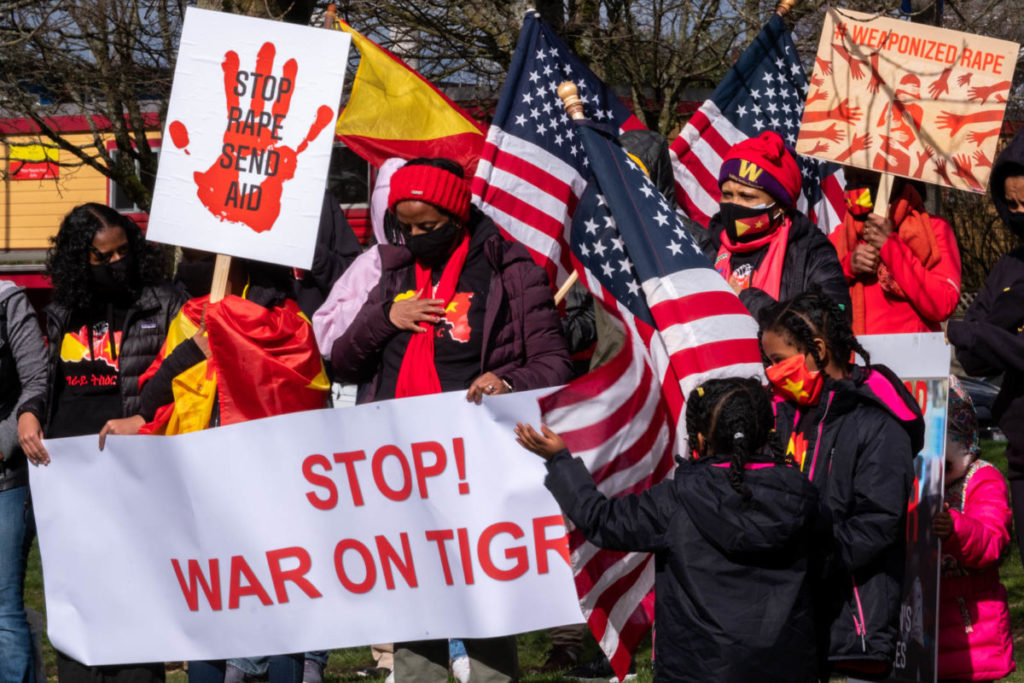
On March 6, hundreds of Seattle residents amassed to protest the ongoing atrocities committed against women in Tigray, Ethiopia. The rally called for the end of rape and assault of Tigray’s mothers and daughters, who have become casualties in the ongoing war fought between the Tigray People’s Liberation Front (TPLF) and the Ethiopian National Defense Forces (ENDF), aided by the Eritrean Defense Forces (EDF).
Jordan Somers | The Seattle Collegian In November 2020, longstanding tensions between the Ethiopian government and Northern leadership of Tigray erupted into war after Prime Minister Abiy Ahmed ordered a military offensive against regional forces in Tigray.Jordan Somers By November 20, the federal government seized control of the region’s capital, causing unrest and insurgency to spread throughout the northern Ethiopia region.Jordan Somers Over 60,000 refugees have fled the country to date, while millions more are in desperate need of humanitarian aid and/or have been displaced.Jordan Somers Eritrean soldiers are also supporting the Ethiopian federal forces to combat the insurgency.Jordan Somers In 2018, Prime Minister Abiy Ahmed rise marked a shift in political power from the Tigray People’s Liberation Front (TPLF), who refused to join the successor. This led to exponentially rising confrontations between both parties.Jordan Somers Ethiopian and Eritrean military, as well as ethnic militias are reported to have been committing widespread acts of sexual violence, targeted ethnic attacks and looting.
On January 4, the Europe External Programme with Africa (EEPA) reported large numbers of women who had been sexually assaulted and raped. Weyni Abraha, a member of the Tigrayan women’s rights group Yikono, asserted that sexual violence is being weaponized as a biproduct of the Tigrayan war. She states, “this is being done purposely to break the morale of the people, threaten them, and make them give up the fight.”
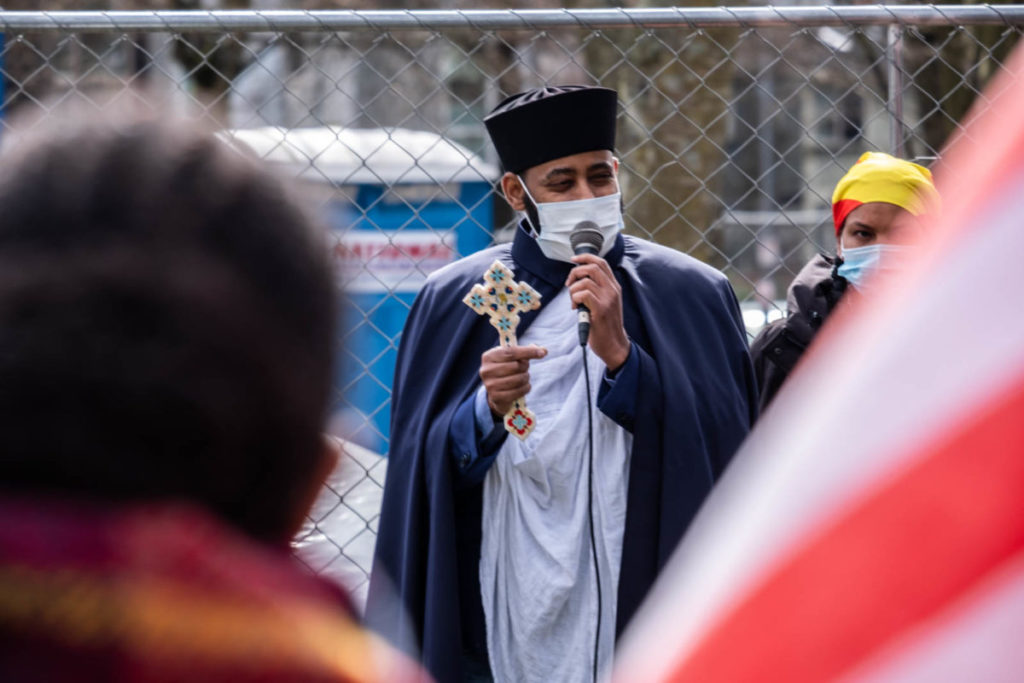
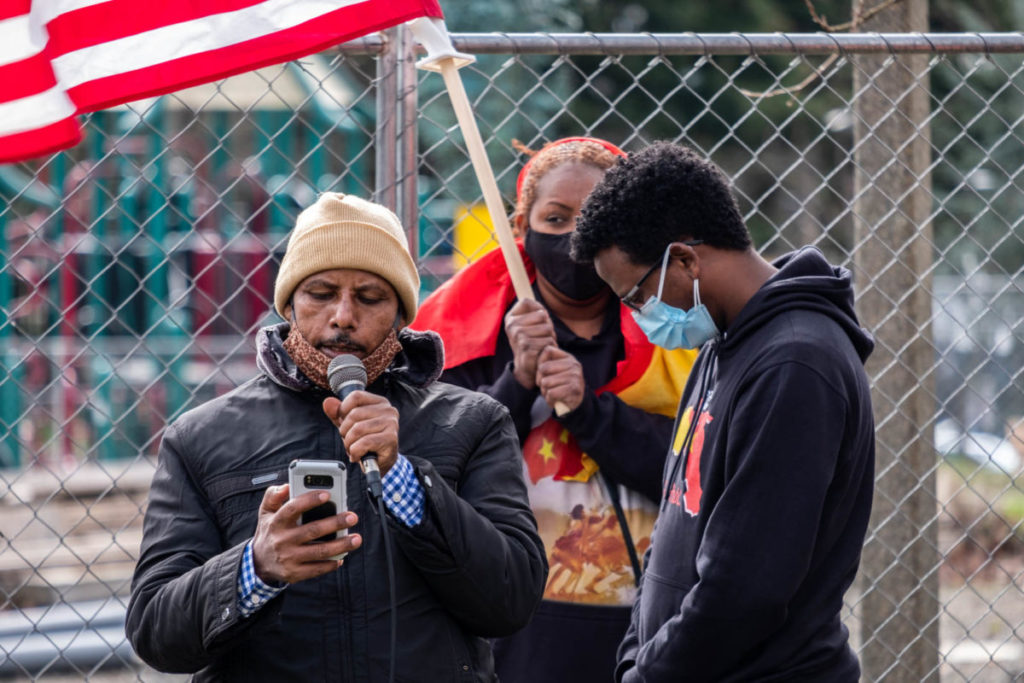
Jordan Somers More than 100 women in the largely remote northern region have reported being raped amid the conflict.Jordan Somers It’s been reported that women in the region have been forced to have sex with soldiers in exchange for basic necessities.Jordan Somers The UN said last month it had received “disturbing” reports of sexual violence in Tigray, including of individuals forced to rape members of their own family.Jordan Somers A media blackout across the region is making it more difficult for humanitarian groups to access certain areas and for journalists to accurately report on the atrocities being committed.Jordan Somers Humanitarian groups are calling for the UN to intervene and for the Ethiopian government to allow health and emergency intervention.Jordan Somers A priest takes some moments to say prayers for the women of Tigray.
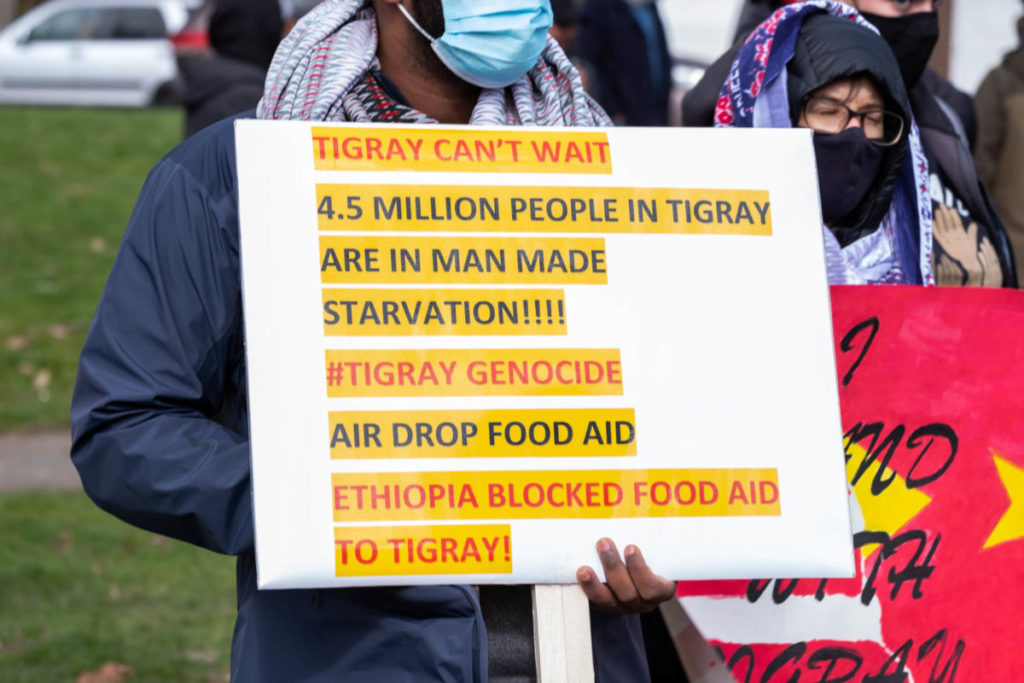
Tigray, the northernmost region in Ethiopia, has seen thousands of its residents flee due to the escalating violence and limited access to basic needs, including electricity, water and medicine. At least 4.5 million residents are in need of humanitarian assistance.
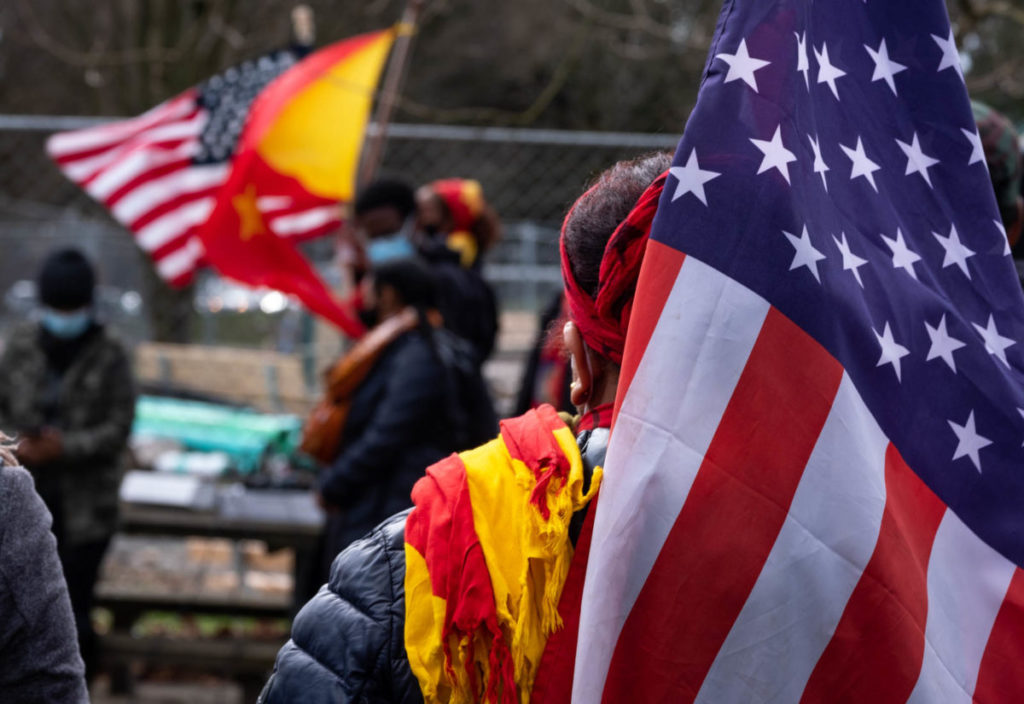
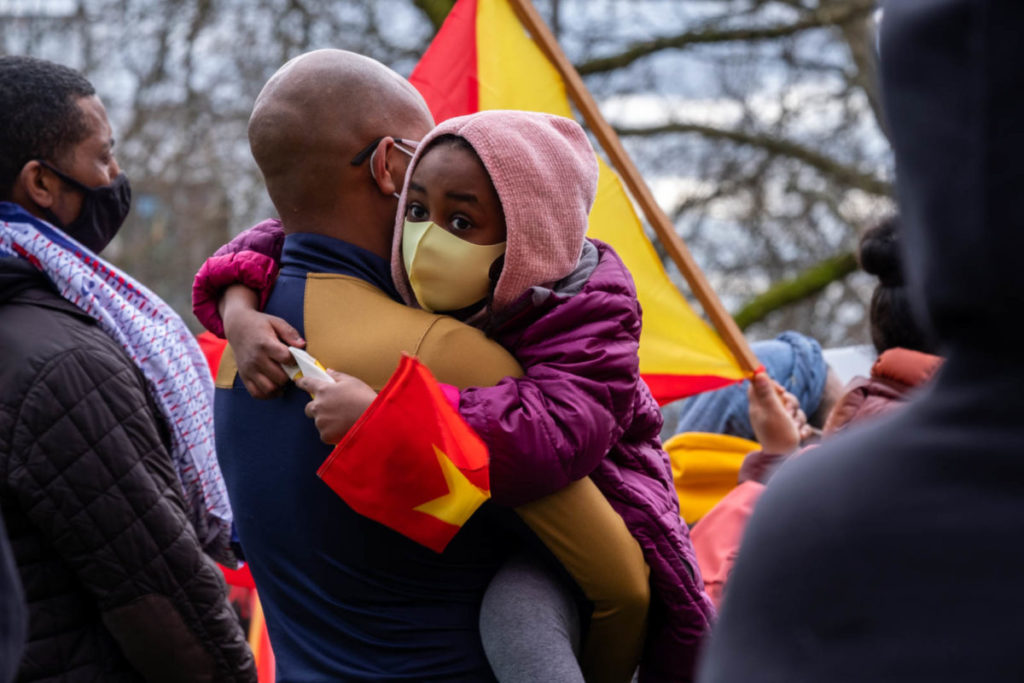
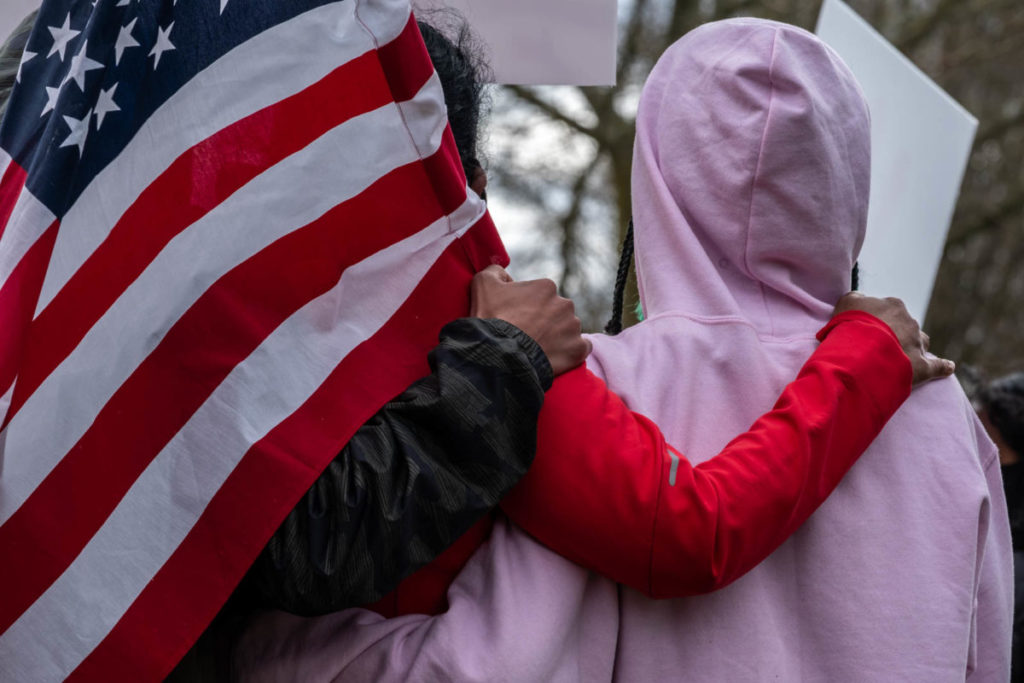
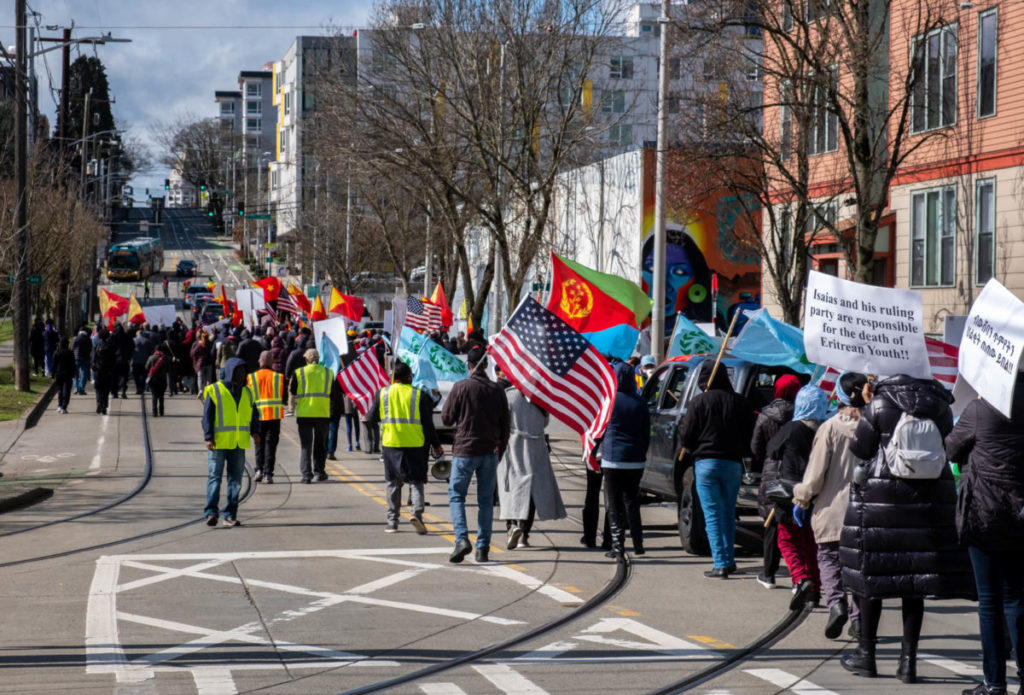
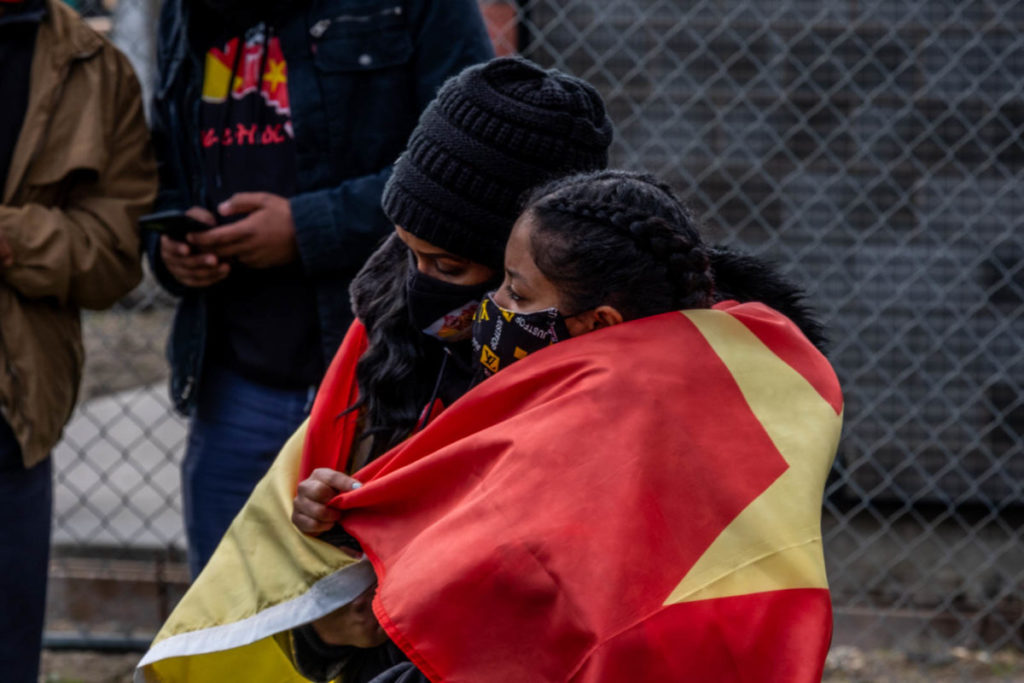
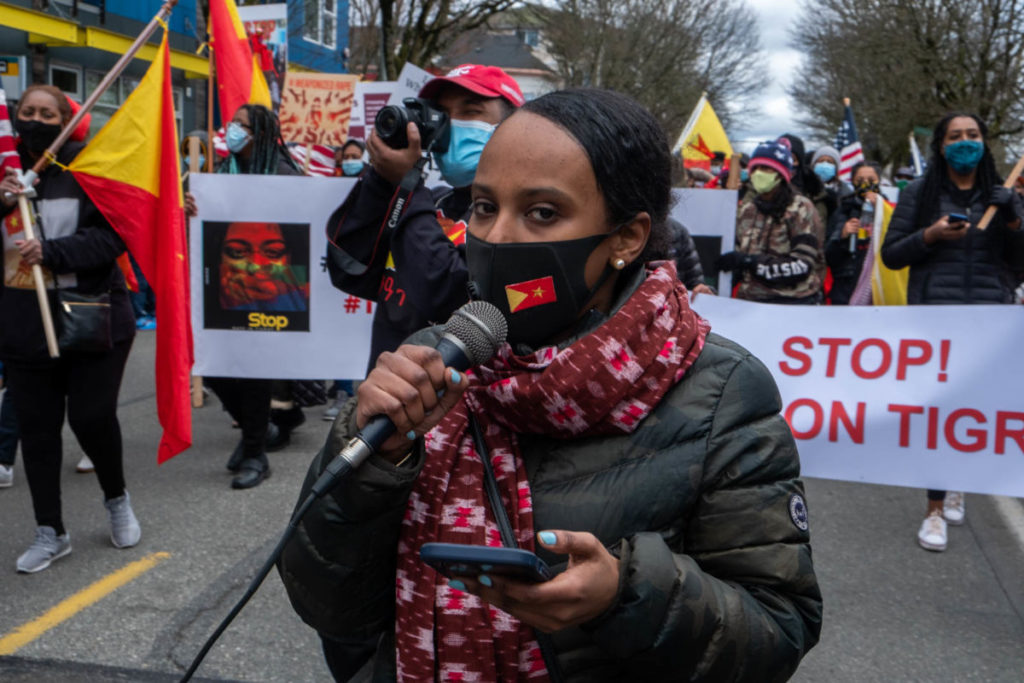
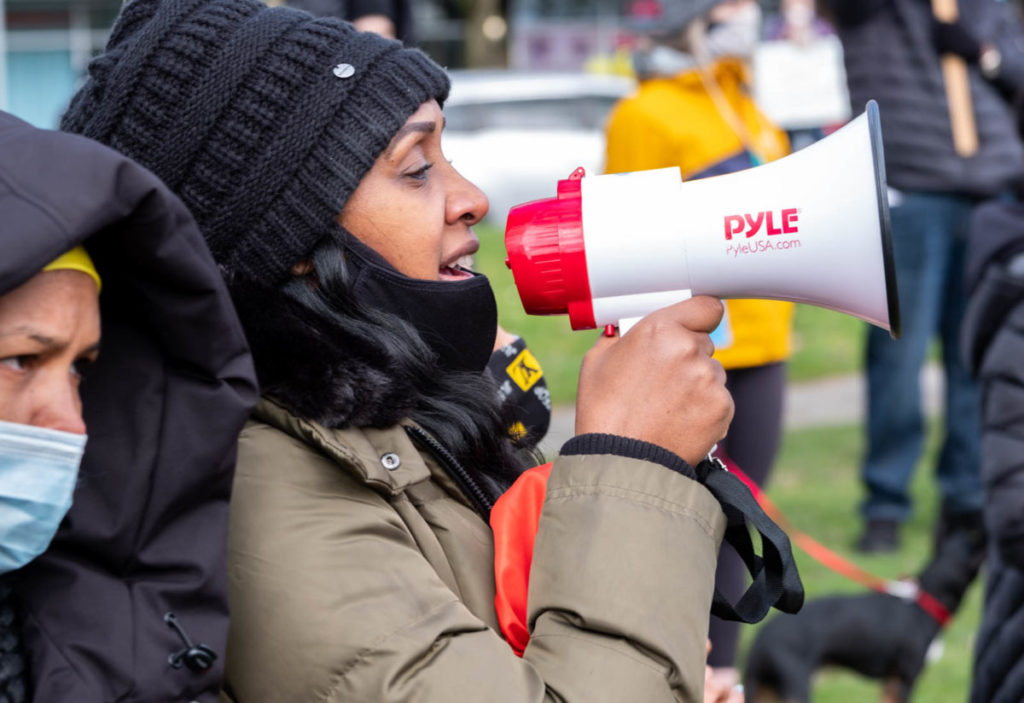
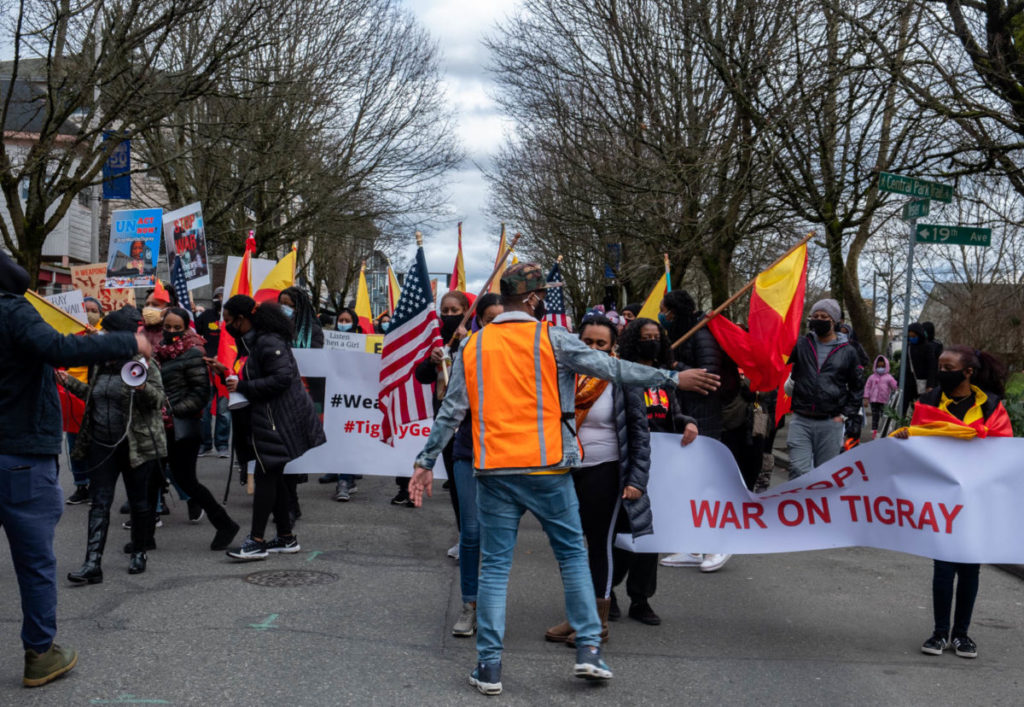
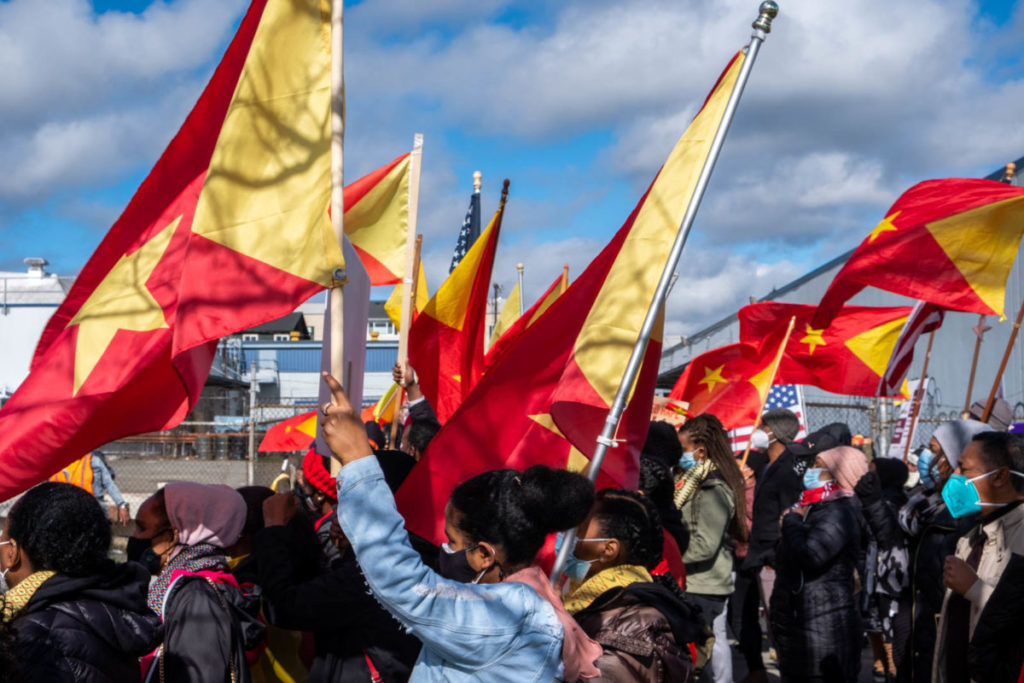
Jordan Somers Hundreds of protestors gathered in the Central District, including friends and relatives of those involved in the Tigrayan conflict.Jordan Somers Speakers took turns reciting poetry, reading names of those wounded or murdered, and informing the gatherers about the Tigrayan conflict.Jordan Somers Speakers took turns reciting poetry, reading names of those wounded or murdered, and informing the gatherers about the Tigrayan conflict.Jordan Somers A woman uses the megaphone to reiterate the words and sentiments of the speakers.Jordan Somers Protestors took to the streets in the Central District and made their way to Broadway Avenue to march for the women of Tigray.Jordan Somers Tigrayan flags coated the gathering of hundreds of protestors during the Saturday march.
Jordan Somers is currently in his second year of Visual Media at Seattle Central College. He specializes in photojournalism and documentary work, with a particular emphasis on social movements happening throughout the city. His 2020 documentary, Hope is Not Cancelled, was an official selection at the Local Sightings Film Festival, and won an award for best editing at the Oregon Documentary Film Festival. Jordan is an avid traveler when granted the opportunity, and has a keen interest in psychology and existential philosophy.
On Wednesday November 6, 2019, a longstanding figure in the Seattle hip hop community came to Seattle Central College to discuss how music and activism have played a major role in his life. As part of the Speaking Up, Speaking Out series, Gabriel Teodros, a musician, KEXP DJ, and former student at Seattle Central came…
Oktoberfest is a two-week festival celebrating German culture, food, and beer. As the German population in the US grew, so did the interest in German celebrations and festivities. The festival, which only took place in Munich, Germany, slowly made its way into American cities and American hearts. Now, the question is, did the Oktoberfest in…
This week, Seattle Central Archaeology students were treated to an over-the-top experiential educational opportunity. Susan Barclay, the instructor for several anthropology courses here at Central, including Medical Anthropology, was a last minute substitution to teach ANTH 204 this quarter, replacing tenured instructor Mohamad Al-Madani, who is taking this quarter off. Barclay’s classes are often highly…
Yesterday Unity Fair, the largest annual event hosted by Student Leadership, filled the South Plaza of the BE Building with students and the public of Capitol Hill. Unity Fair achieved its goal bringing the college’s diverse clubs and organizations together. A stage with a DJ, mics, keyboards and a drum kit were set up in the…
Protestors assembled en masse on Saturday, March 7, demanding the protection of Black trans women’s lives and decrying the violence against all trans women. The rally began at the Cal Anderson Park playfield, where a vigil was held to remember and honor lives violently lost in recent years. Members of the protest took turns…
The mission of Seattle Central College’s Behavioral Intervention Team’s (BIT) is to provide a safe environment for the campus community through collaboration, information collection, risk assessment, and intervention. BIT’s history began in the Spring of 2011 as a way to address reports of students being disruptive, getting angry or being threatening — but also to…