The road to the Red Cup Rebellion
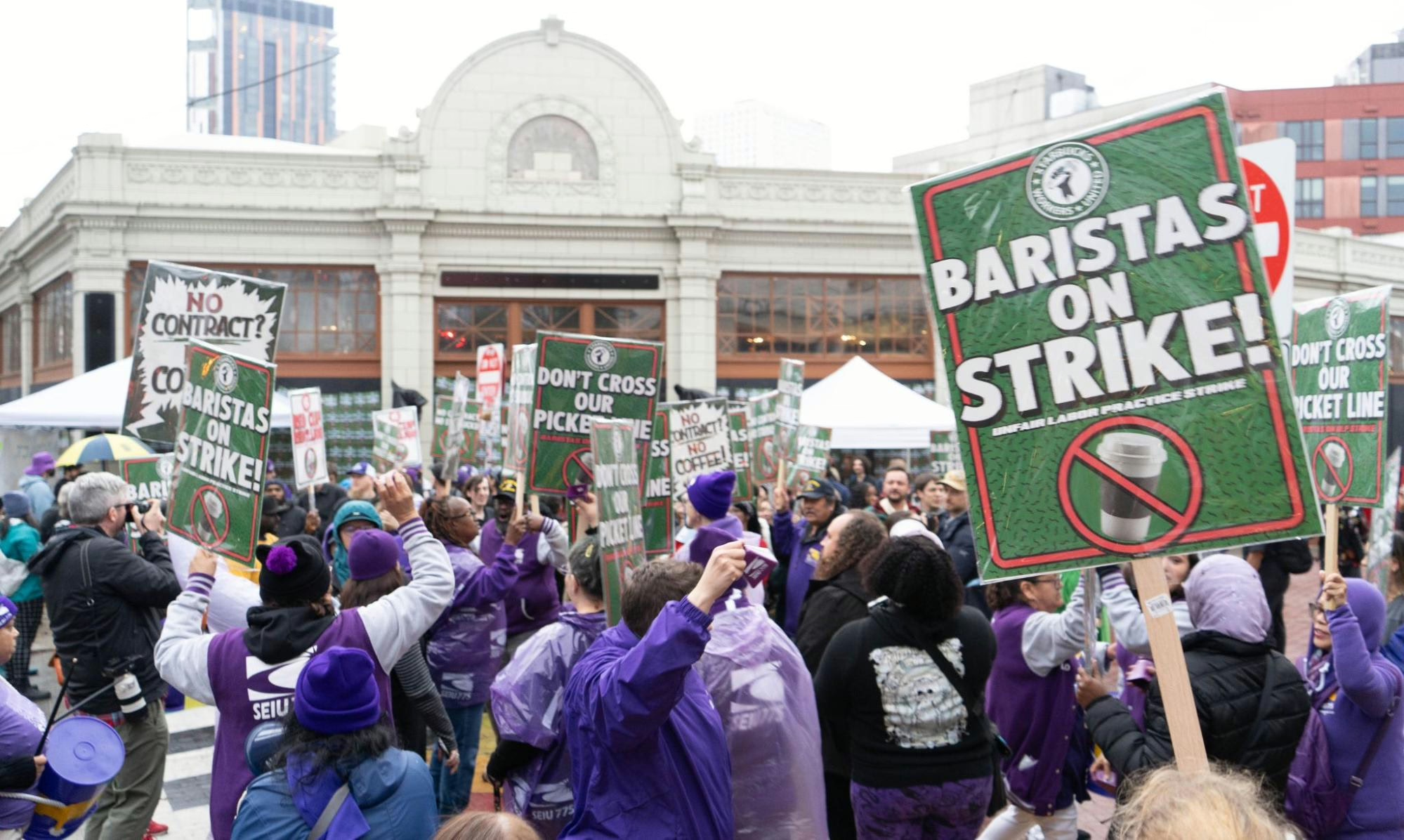
On Nov. 13, baristas stole the Red Cup Day spotlight from Starbucks with a strategically timed protest, which has become something of a holiday tradition since Starbucks Workers United (SBWU) organized its first store in 2021.
Escalating the four-year labor battle between Starbucks and SBWU, roughly 1,000 unionized baristas from 65 stores nationwide began an indefinite strike called the “Red Cup Rebellion.”
Two of those stores are in Seattle’s Queen Anne and University District neighborhoods. Local baristas closed their shops in response to being “stonewalled” by the company since April 2025, when collective bargaining reached an impasse.
The demands of the latest strike are the same as they were during negotiations six months earlier: more consistent hours to improve store staffing, higher take-home pay, and a resolution for more than 700 outstanding unfair labor practice (ULP) charges.
Until then, SBWU and a broad coalition of allies are calling for a boycott of Starbucks.
Fresh off shutting down their workplaces, Seattle baristas rallied outside the recently closed Starbucks Roastery on Capitol Hill. Supporters from labor groups including Service Employees International Union, United Association Local 32, and MLK Labor joined striking workers in a raucous protest.
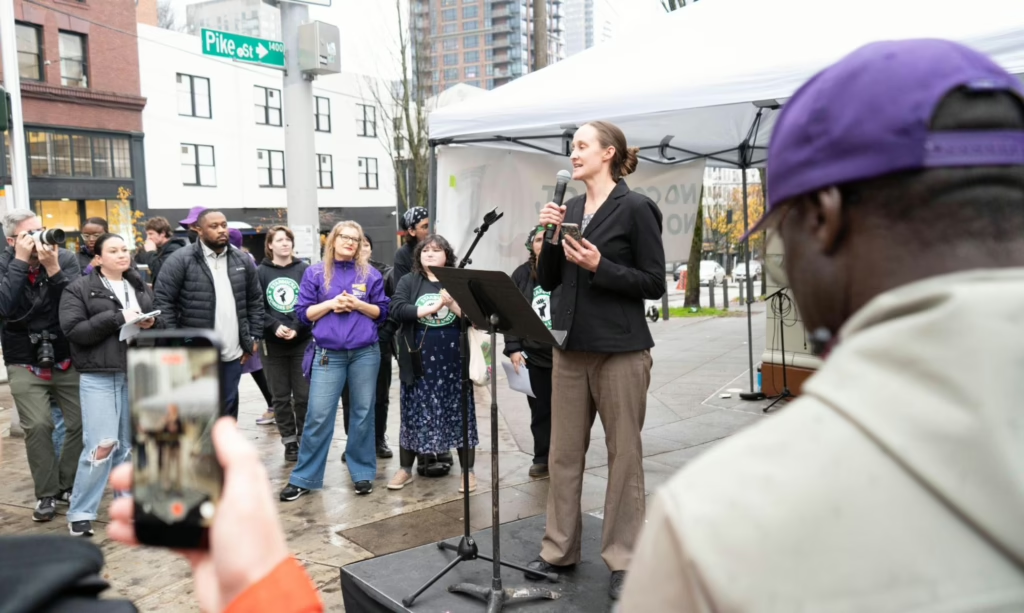
Among the speakers addressing the lively crowd was Mayor-elect Katie Wilson, who appeared at the rally just two hours after declaring victory over incumbent Bruce Harrell in this year’s competitive election.
“Today, I’m asking everyone who believes in fairness, dignity, and workers’ rights to stand with us on the picket line. While baristas are on strike, they have said that the best way to show support is to avoid buying Starbucks in solidarity.”
Four years without a contract
Since unionizing the first store in Buffalo, New York, in 2021, Starbucks has faced tense labor relations, declining financial reports, and a revolving door of executives with different ideas on how to turn the company around.
Strikes have taken place on Red Cup Day since 2022, with workers demanding that Starbucks come to the bargaining table. This didn’t happen for another two years.
In September 2023, the National Labor Relations Board (NLRB) issued a cease-and-desist order to the company, resolving a 2022 case where the company surveilled, interrogated, and unlawfully discharged Wisconsin workers for engaging in union activity.
Describing the company’s conduct, the administrative law judge ruling on the case stated that Starbucks “engaged in a scorched-earth campaign and pattern of misconduct in response to union organizing at its stores across the United States.”
Five months later, Starbucks and SBWU announced a shared commitment to create a collective bargaining framework, establish an organizing process, and resolve outstanding ULPs. The announcement raised hopes that a contract was on the horizon.
Negotiations began in April 2024, two months later. From then until December 2024, the parties worked out 33 tentative agreements on primarily non-economic issues like “just cause,” workplace safety, and dress code. But when talks shifted to economic issues—wages and benefits—negotiations quickly deteriorated.
On Dec. 23, 2024, SBWU filed a ULP charge accusing Starbucks of bad-faith negotiating on economic language. The union alleged that Starbucks “denied the Union’s proposal for an increased period of paid parental leave on or about Nov. 19, 2024, while on Dec. 17, 2024, offering increased paid parental leave to all retail employees, thereby undermining the Union’s representational status.”
The tension prompted the union to involve a mediator. But in April 2025, 81 percent of SBWU delegates rejected Starbucks’ latest proposal and walked away from the bargaining table. While the proposal guaranteed annual raises of at least two percent, it offered no immediate raises and did not include any language on health care.
Negotiations have not resumed since.
Finding a new frontman
Since baristas started to organize in 2021, Starbucks has introduced four CEOs. Each year, a new executive has a slightly different answer to the same question: How do we turn Starbucks around?
Strategies have included modernizing the business by investing in the Starbucks app and online ordering, streamlining operations, expanding their market in China, and experimenting with new retail and menu options. With varying success, each CEO has taken their own approach to combat declining sales and shifting consumer habits in a post-COVID-19 economy, during which the company’s value has reduced significantly.
None has reached a first contract with SBWU.
In September 2024, in the midst of collective bargaining, Starbucks put its faith in another new leader: Brian Niccol.
During his tenure as CEO of Chipotle, he was known for navigating the food chain through a turbulent period after salmonella outbreaks, while modernizing operations and increasing shareholder value. With such a reputation, it’s clear why Starbucks’ Board sought him out.
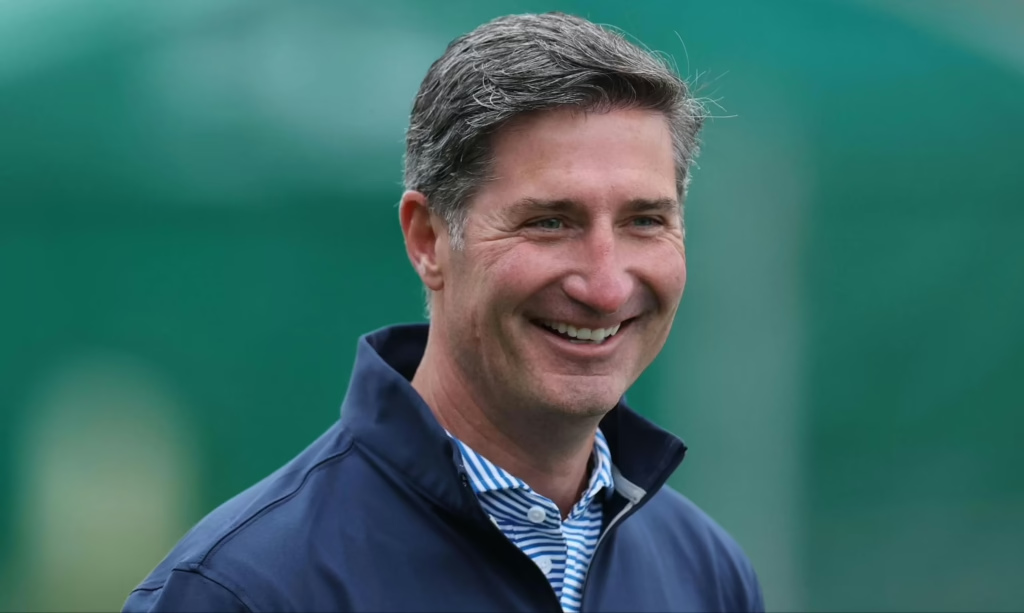
What has drawn significant scrutiny in this choice, however, is how aggressively Starbucks pursued Niccol. Here is a breakdown of the compensation package that courted him into the coffee business:
- A $10 million signing bonus.
- Stock grants to replace his Chipotle shares totaling $75 million to $80 million, which he may keep even after departing Starbucks, provided he is not let go for misconduct.
- A $1.6 million annual salary.
- A possible annual bonus worth 225 to 450 percent of his salary.
- An additional $23 million in stock annually starting in 2025.
- A luxury remote office five minutes away from his California home.
- A company plane for commuting to the Seattle corporate office.
- $250,000 in private plane travel for personal, non-commute use.
All told, Niccol earned $96 million in 2024 for less than 120 days of work, more than the total compensation of all Starbucks CEOs since 2021 combined. He also stands to earn up to $31 million in 2025 from salary, bonuses, and additional stock awards.
This package has drawn criticism from SBWU, as such an extravagant offer for one employee is 6,666 times higher than the average barista’s earnings and about $20 million more than the estimated cost of settling a contract.
What has $96 million bought for Starbucks?
Right out of the gate, Niccol announced his “Back to Starbucks” plan in early September 2024. Its stated goals were to “empower baristas to take care of customers” and “reestablish Starbucks as the community coffeehouse.” More concretely, the strategy aims to bring customers back with a more welcoming atmosphere, shorter wait times, and streamlined operations.
Some of the changes implemented as a result have been updated mobile ordering algorithms, additional staffing, a policy requiring baristas to write personalized messages on cups, simplifying menu items, and a new uniform policy.
Although Starbucks says progress will be slow, results are emerging a year into Niccol’s tenure, illustrated by a recent report.
While high prices were customers’ top issue, long wait times continued to significantly affect their experience, with 78 percent of surveyed customers saying wait times have stayed the same or worsened since last spring. With long waits, 42 percent of frequent customers experiencing issues say they visit Starbucks less as a result.
These longer wait times are largely caused by understaffing, which 91 percent of surveyed workers say they have faced. Niccol has agreed that an “additional one to three employees” in the store would be beneficial to operations, but managers claim that this is insufficient.
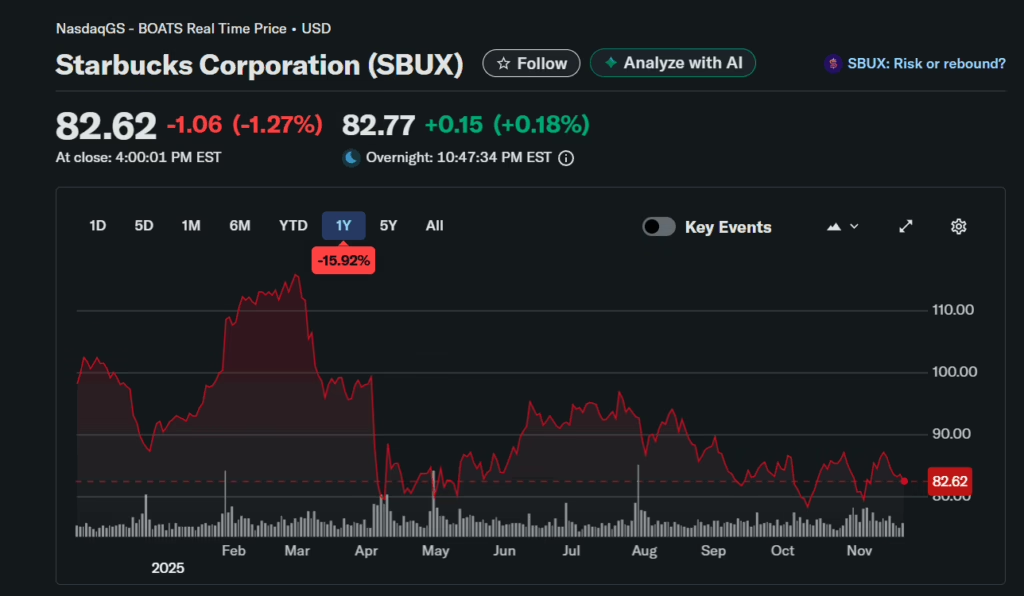
As prices increase and service slows down from understaffing, customers are looking elsewhere for coffee, coinciding with a 15 percent drop in Starbucks’ shares over the last 12 months.
Niccol remains optimistic on his “Back to Starbucks” initiative, saying “the feedback says, ‘Do more of what you’re doing.’”
Some investors do not share this enthusiasm.
The SOC Investment group, which holds a relatively small stake in Starbucks, sent an open letter in September outlining its discontent with deteriorating labor relations, excessive executive compensation, and the economic failure of new policies.
The group wrote, “Rather than lavish further ‘incentives’ on executives, the Board would do better to encourage management to quickly reach an equitable settlement with unionized baristas… if Mr. Niccol, his executive team, and the Board do not correct their course soon, an opportunity to significantly increase value for long-term shareholders could be lost.”
These concerns are shared by firms holding larger stakes in Starbucks, like Trillium Asset Management, which sold 4.9 percent of its 200,000 shares during the second quarter. In October, they joined New York City Comptroller Brad Lander, Shareholder Association for Research and Education (SHARE), and Pensions Investment Research Consultants (PIRC) in sending a letter to the company’s board of directors.
“We are concerned that Starbucks’ labor relations have significantly deteriorated, as reflected by more than one hundred unfair labor practice complaints filed since the beginning of the year, in-store actions, partner walkouts, protests over store closings and strikes… As such, we are calling on the company to promptly reach a first contract with SBWU.”
When will workers return to Starbucks?
While striking baristas have not yet heard from the company, a Starbucks spokesperson told Business Insider, “Despite Workers United’s efforts to cause disruption, more than 99% of our coffeehouses remain open, and our partners delivered the strongest Reusable Red Cup Day in company history, building on last Thursday’s holiday launch, which was the biggest sales day ever for the company.”
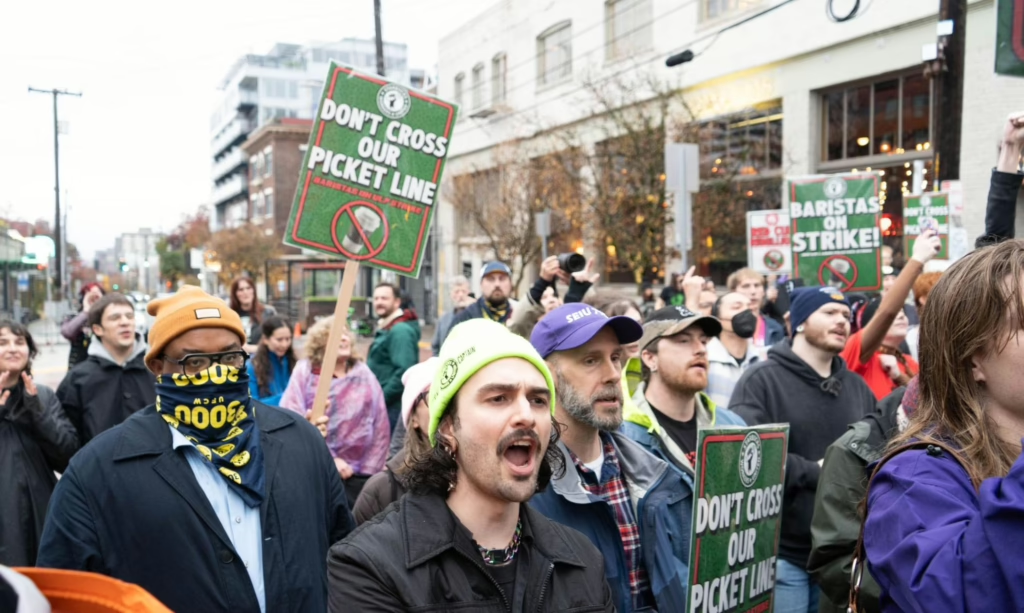
As the strike stretches on indefinitely, workers continue to picket outside their now-closed storefronts. Emma Cox, a seven-year barista at University Village’s location and the first at their store to contact the union in 2022, says, “It’s going to be as long as it takes to get a contract, so we’ll be out here… we’re prepared to keep bringing the heat.”
SBWU has more “heat” to bring into the holiday season, as they demonstrated on Nov. 20 by escalating the strike to include more than 30 new stores and 2,000 union baristas. There are about 550 locations represented by the union, amounting to over 11,000 baristas, all of which SBWU says are prepared to continue escalating the strike.

Casey Boothe
Driven by curiosity, Casey is studying journalism in the pursuit of using stories to make sense of the world. Since moving to Seattle two years ago, he’s fallen in love with the city’s vibrant culture, especially within the culinary scene. As a Staff Writer for the Collegian, he is eager to highlight stories and people that resonate with the local community. Aspiring to join the long legacy of journalists speaking truth to power, Casey hopes to keep Seattle informed and engaged.